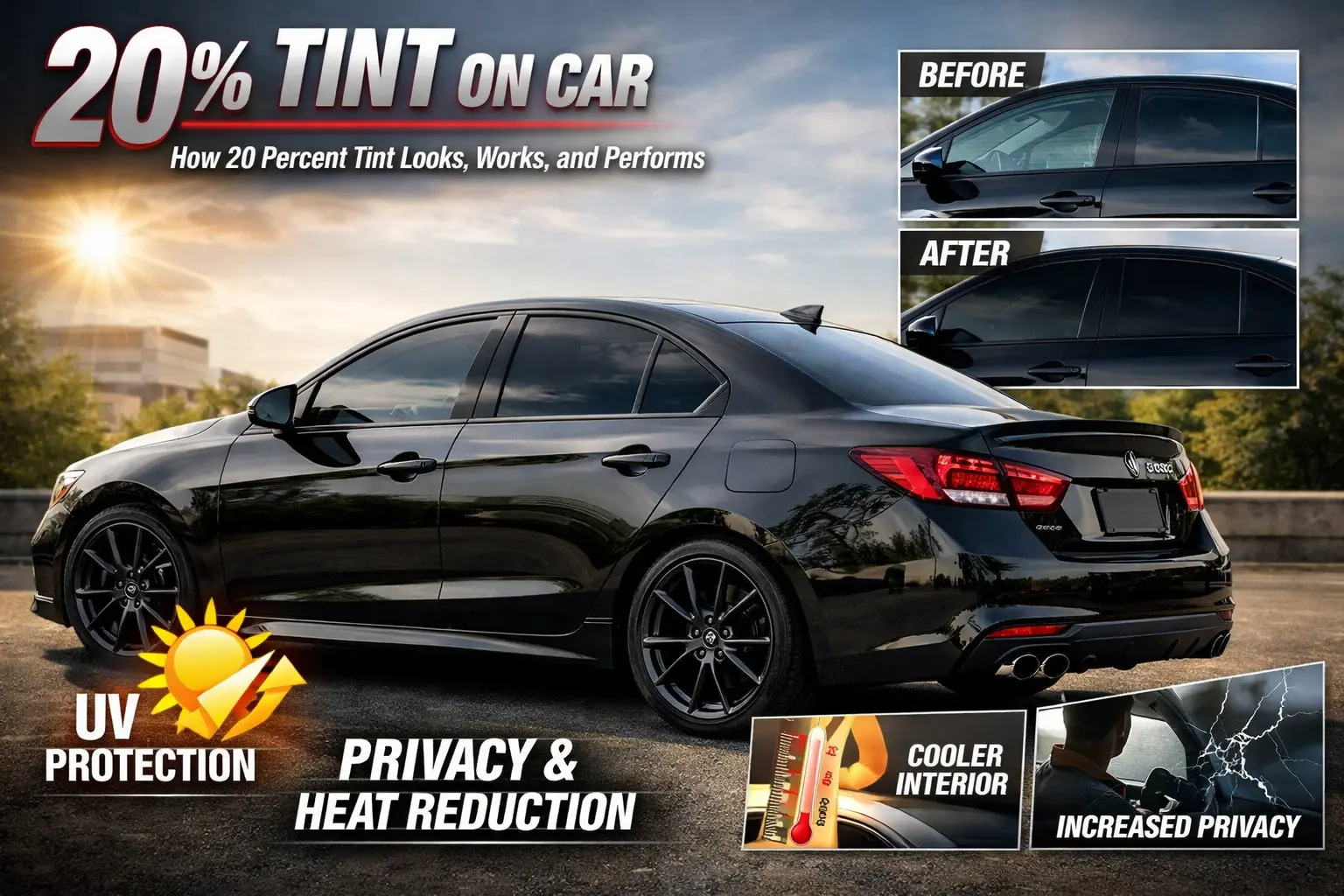
Are you thinking about tinting your car windows but not sure which shade to choose? A 20% tint on car: How 20 percent tint Looks, Works, and Performs might be the perfect option for you. This dark tint not only gives your car a sleek look but also protects you from sunlight and adds privacy. In this blog, we will explain how it works, what it looks like, and why it can improve your driving experience. By the end, you will know if 20% tint is the right choice for your car.
What is 20% Tint?
A 20% tint means that only 20% of light passes through your car windows. This is a darker shade, giving your car a sleek and stylish appearance.
- Also called 20 window tint or 20% window tint.
- Often used on side and rear windows for privacy.
- Blocks around 80% of sunlight and harmful UV rays.
Legal case newz explains that 20% tint is popular because it balances style, comfort, and protection.
How 20 Percent Tint Looks on a Car
Many drivers want to know what does 20 tint look like. Here’s a clear picture:
- Windows look dark from the outside.
- Inside the car, visibility is still reasonable during the day.
- At night, 20 tint at night can slightly reduce clarity but is still safe for driving.
- Gives a classy, sporty, and private look.
20 window tint before and after comparisons show a big difference in privacy and sunlight reduction. It’s darker than 35% or 32% tint, but not the darkest available.
How 20 Tint Works
20 percent tint on car works by using a thin layer of dye or ceramic material on the glass. Here’s how it performs:
- Blocks Sunlight
- Stops about 80% of sunlight.
- Reduces glare during daytime driving.
- Protects from UV Rays
- Prevents sun damage to your skin and car interior.
- Helps keep seats, dashboard, and electronics safe from fading.
- Enhances Privacy
- People outside cannot see inside easily.
- Perfect for passengers or valuable items in the car.
- Temperature Control
- Keeps the car cooler by reducing heat from the sun.
- Less reliance on air conditioning saves fuel.
- Safety During Accidents
- Window film keeps broken glass together.
- Reduces the risk of injury in case of accidents.
20% Tint vs Other Tints
When choosing a tint, it’s helpful to compare it with others:
- 15 vs 20 tint: 15% is darker, offering more privacy but lower visibility.
- 20 vs 30 tint: 20% is darker than 30%, giving better sunlight protection.
- 32 tint vs 20 tint: 20% tint is darker and blocks more light.
- 35 window tint vs 20 or 35 vs 20 tint: 20% is the darker, more premium option.
If you want a balance between privacy and daytime visibility, 20% tint is a strong choice.
20% Ceramic Tint vs Standard Tint
Not all tints are the same. You can choose standard dye tints or 20% ceramic window tint. Ceramic tint has several benefits:
- Better heat rejection.
- Blocks more UV rays.
- No signal interference with GPS, Bluetooth, or radios.
- Longer lifespan and better durability than standard tint.
If you want 20% ceramic tint, it might cost more but offers superior protection.
Legal Rules for 20% Tint
Before installing 20 percent tint on car, you must check your state laws. Rules vary:
- Is 20 tint legal in California: Only on rear and side windows for some cars. Front side windows have stricter limits.
- Is 20 tint legal in Texas: Allowed on rear windows, front windows may need lighter tint.
- Is 20 tint legal in GA (Georgia): Legal on most cars for rear windows; front limits apply.
- Is 20 tint legal in Massachusetts: Front windows may require lighter tint, check state rules.
- Is 20 tint legal in Illinois: Rear windows usually okay; front windows limited.
Always verify your state’s tint laws before installation to avoid fines or legal issues.
How Dark is 20 Tint?
Many ask how dark is 20 tint. Here’s a simple explanation:
- Quite dark from outside.
- Provides a private feel for passengers.
- Daytime visibility inside is still clear.
- Night driving may be slightly darker, but safe under proper lighting.
Pros and Cons of 20% Tint
Pros:
- Stylish and sleek look.
- Reduces heat inside the car.
- Blocks harmful UV rays.
- Improves privacy and security.
- Protects interior from fading and cracking.
Cons:
- Slightly reduced visibility at night.
- May not be legal on front side windows in some states.
- Higher cost if choosing ceramic tint.
Installation Tips for 20% Tint
- Choose a professional installer.
- Clean the windows before installation.
- Avoid DIY kits for best results.
- Consider ceramic tint for better heat and UV protection.
- Check 20 window tint before and after pictures to ensure quality.
Conclusion
20% tint on car is a popular choice for drivers who want privacy, style, and sun protection. It blocks harmful UV rays, keeps your car cooler, and protects your interior. Ceramic options provide extra durability and heat rejection.
Before installing, check your state laws like is 20 tint legal in GA or California. Compare with other tints like 15%, 30%, or 35% to decide what suits your needs. For best results, choose a professional installer and high-quality film.
If you want to enhance your car’s look, comfort, and safety, 20% tint is a smart choice.
Legal case newz recommends reviewing your state rules and selecting the right type of tint for your car. Don’t wait – upgrade your car with 20 percent window tint today!
Related articles:
30% Tint on Car
Florida Window Tinting Law
Michigan Window Tint Laws
California Window Tint Laws
Legal Percentage of Window Tint