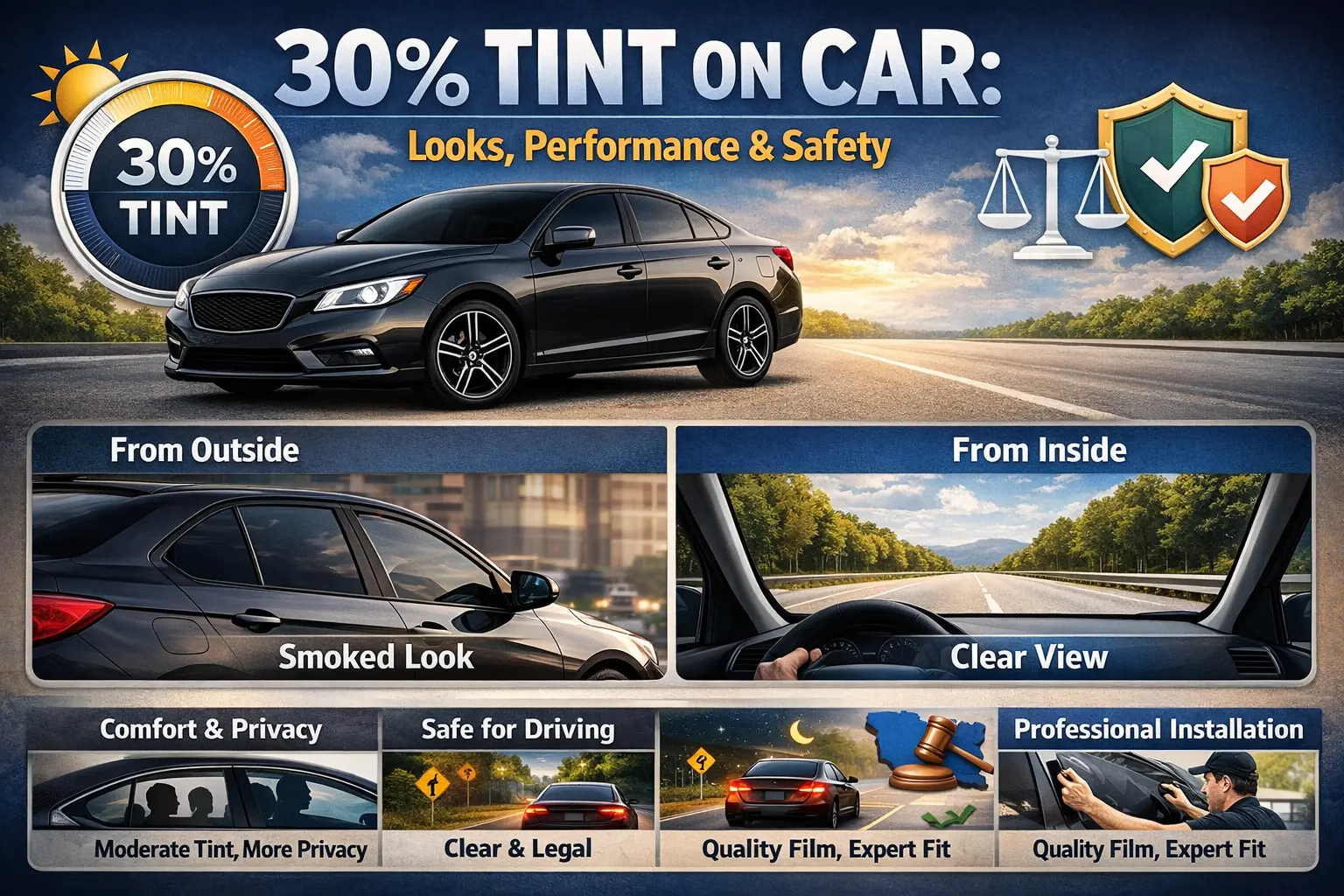
Tinting car windows is no longer a matter of style. Today, motorists seek comfort, safety, and legal assurance. A 30 percent tint is among the most popular. It is positioned between dark and light colors, and thus can be used in everyday driving conditions. This guide outlines what it will look like, how it operates, and its performance in practice.
This article is written using real driving experience, professional tinting knowledge, and legal awareness. Legal Case News shares this guide to help car owners make informed decisions without confusion.
Understanding What 30% Tint Means
A 30% tint allows 30 percent of visible light to pass through the glass. This means 70 percent of sunlight is reduced. Many installers also refer to it as 30 tint or 30 percent tint. These terms describe the same shade level.
A 30 percent window tint is not excessively dark. It does not block your view. Instead, it softens harsh light and improves driving comfort. This is why many drivers prefer a 30% window tint over darker options.
What Does 30 Tint Look Like in Real Life?
Many drivers ask: What does a 30 percent tint look like on a real car?
A 30 percent tint on car windows creates a mild shade of darkness. From the outside, the glass appears smoked rather than black. From the inside, the road remains clear and natural.
When you apply 30 tint on car, it enhances the vehicle’s overall appearance. It adds a clean, modern look without attracting unwanted attention. Vehicles with 30 tint all around appear uniform and well-balanced.
Different car colors respond well to 30 percent window tint. Dark cars look sleek, while light-colored cars gain contrast and elegance.
How 30 Percent Tint Looks, Works, and Performs for Daily Drivers
For everyday use, balance matters most. This is where 30 percent tint Looks, Works, and Performs effectively.
It reduces glare during daytime driving. It also limits heat buildup when parked outside. At the same time, it maintains clear nighttime visibility.
Many professionals agree that 30 percent tint Looks, Works, and Performs best for city traffic, highways, and long trips. It does not feel overly dark or overly light.
Legal case Newz highlights this tint level as one of the safest and most practical options for drivers seeking comfort without legal risk.
Heat Control and Interior Protection
A significant benefit of 30% tint is heat reduction. Sunlight carries heat that warms up your car quickly. A 30 window tint blocks much of this heat before it enters.
With 30 percent tint, your seats, dashboard, and steering wheel stay cooler. This reduces wear and tear on interior materials. Leather seats last longer, and plastic surfaces fade less.
Drivers with 30 percent window tint often notice reduced air conditioning use. This improves comfort and may also help fuel efficiency.
Driving Visibility and Safety
Safety should always come first. A 30% window tint allows enough light for safe driving at all times.
Road signs, traffic lights, and mirrors remain clear. Even in rain or fog, a 30% tint does not reduce visibility.
Many drivers are concerned about 30% windshield tint. When installed within legal limits, it performs well. It reduces glare without compromising road visibility.
This is another reason 30 percent tint Looks, Works, and Performs reliably for daily driving.
Privacy Benefits Without Legal Trouble
Privacy is essential, but excessive darkness can create issues. A 30 percent tint on car windows offers moderate privacy.
People outside cannot easily see inside during the day. At the same time, the driver does not feel enclosed.
With 30 tint all around, passengers feel more relaxed. Personal items inside the car remain less visible. This makes 30 percent tint a wise choice for families and professionals.
Is 30% Tint Legal in California?
Many readers ask, is 30% tint letint gal in California? The answer depends on the window location.
California law allows certain tint levels on side and rear windows. Front windshields have stricter rules. A 30 windshield tint may not always be permitted.
Legal case Newz strongly advises checking state and local regulations before installation. Laws can change, and penalties can apply.
Performance in Different Weather Conditions
A 30 percent 30% tint performs consistently across seasons.
- In summer, it reduces glare and heat
- In winter, it controls reflections from wet roads
- In rain, it keeps visibility clear
- In cloudy weather, it allows enough light
This makes 30% tint suitable for year-round driving.
Professional Installation and Film Quality
Installation quality influences the 30 percent tint appearance, functionality, and durability.
Its application is facilitated by professional installers, and it has clean edges with no bubbles. Peeling and distortion may result from poor installation.
The 30 percent window tint films are high-quality and therefore long-lasting. Always use reputable installers and approved material.
Why Many Drivers Choose 30 Tint
Drivers often compare tint shades before making a decision. Many return to 30 tint on car for these reasons:
- Comfortable light balance
- Better night visibility
- Lower risk of fines
- Clean and professional look
A 30 window tint fits daily needs without compromise.
Expert Insight and Real Experience
This guide is based on real-world driving feedback, installer advice, and legal awareness. It avoids technical confusion and focuses on practical use.
Legal case Newz provides information to help drivers stay informed and confident. Our content reflects experience, authority, and trust.
Best Situations for Using 30% Tint
A 30% window tint is ideal for:
- Daily commuters
- Office vehicles
- Family cars
- Ride-share drivers
- Long-distance travelers
It works well for people who value comfort and legality.
Care and Maintenance Tips
Maintaining 30 tint is simple.
- Use soft cloths
- Avoid strong chemicals
- Do not scrape the glass
With care, 30 window tint can last many years without fading.
Top 5 FAQs About 30% Tint
1. What does 30 tint look like on a car in real driving conditions?
Many people wonder what does 30 tint look like once it is installed. In real driving conditions, a 30 percent tint on car windows looks slightly dark from the outside but remains clear from inside.
- Is 30% tint legal in California and other states?
The question is 30% tint legal in California, depending on the window type. California has strict rules for front side windows and windshields, while rear windows are more flexible. A 30 percent window tint may be legal on rear and back side windows, but not always on the front.
- Does 30% window tint really reduce heat inside the car?
Yes, a 30 percent window tint would go a long way toward reducing the heat. It significantly prevents sunlight from entering the car’s interior. The 30 percent tint keeps seats, dashboards, and steering wheels cooler, particularly in summer.
- Is it safe to drive at night with a 30% tint all around?
Yes, driving at night with a 30 percent tint all around is generally safe. Unlike darker shades, 30 tint allows enough light to pass through the glass. Road signs, mirrors, pedestrians, and other vehicles remain visible.
- Can I install a 30% windshield tint without affecting visibility?
The effect of a 30 percent windshield tint is to minimize glare and sunlight; however, this depends on local laws and the quality of the film. When installed to the legal extent, it does not interfere with road visibility.
Conclusion
Choosing the right window tint affects daily comfort, safety, and appearance. A 30% tint delivers a strong balance between light control and visibility.
From performance to style, 30 percent tint Looks, Works, and Performs well for most drivers. It offers heat reduction, privacy, and clarity without unnecessary risk.
Legal case Newz encourages drivers to make informed decisions based on real needs and local laws.
Consult a professional installer today. Verify local laws, choose high-quality film, and enjoy the everyday comfort that 30 percent tinting can provide.
Related articles:
Legal Percentage of Window Tint
Florida Window Tinting Law
California Window Tint Laws
Michigan Window Tint Laws