
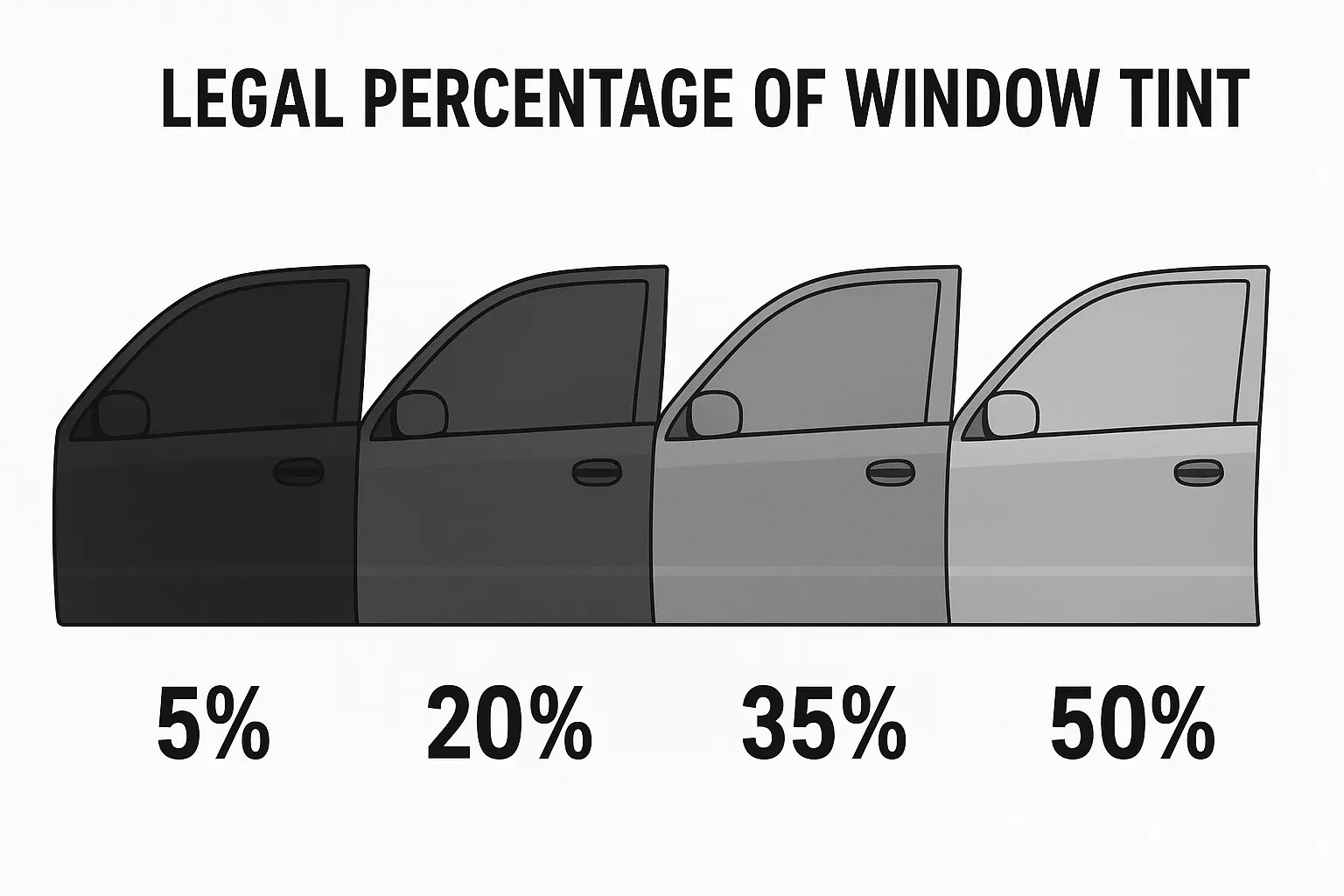
Short answer: There is no single legal tint percentage in the U.S. Each state sets its own limits, usually stricter for the front side windows than for the windows behind the driver. Among the states below, front-window rules range from no film (Michigan) or clear film only (California) to 25% in Texas. Check your state before installing film.
Last reviewed: November 13, 2026. Each state row links to a guide that cites that state’s statute.
What the percentage means
Tint percentages measure visible light transmission (VLT): the share of outside light that passes through the glass and film together. A 50% window lets in half the light; a 5% “limo” window lets in very little. Police check VLT with a handheld meter, and the reading includes the factory glass, so film usually reads darker once installed than its label suggests.
Legal window tint by state
| State | Front side windows | Rear side windows | Rear window | Windshield | Penalty |
|---|---|---|---|---|---|
| California | Clear film only; 70% with film | Any | Any, with dual side mirrors | Clear strip at top | Infraction, no points |
| Florida | 28% | 15% (SUVs and vans 6%) | 15% (SUVs and vans 6%) | Strip above AS-1 line | Nonmoving infraction, $30 base plus costs |
| Illinois | 35% (50% if rear windows are darker than 35%) | No % in statute | No % in statute | Top 6 inches | $50 to $500 |
| Michigan | Top 4 inches only | Any | Any | Top 4 inches | Set by local court |
| Ohio | 50% | Any | Any (mirrors if under 50%) | Top 5 inches | Up to $150 |
| Texas | 25% | Any | Any, with dual side mirrors | Top 5 inches or AS-1 line | $1 to $200 |
| Virginia | 50% | 35% (SUVs and trucks any) | 35% (SUVs and trucks any) | Factory sunshield area only | Traffic infraction, no points |
Patterns across states
- Front side windows are the strictest. Officers need to see the driver, so most states set their highest light requirement here.
- Behind the driver is usually looser. Many states allow any darkness on rear side windows, often requiring side mirrors on both sides if the rear window is dark.
- Windshields allow only a top strip. States typically limit tint to the area above the AS-1 line or a few inches from the top.
- Reflective film is restricted. Most states cap reflectance or ban mirror-finish film outright.
- Medical exemptions exist almost everywhere, but the paperwork differs: some states want a doctor’s letter in the car, others issue a certificate or special plates.
Before you tint
- Look up the limits for the state where the car is registered and driven.
- Ask the installer to meter your windows after installation, including the factory glass.
- Keep the receipt and any compliance certificate or label your state requires.
- If you move, check the new state’s limits; tint legal in one state can be illegal in the next.




1 thought on “What Is the Legal Percentage of Window Tint? State Guide”