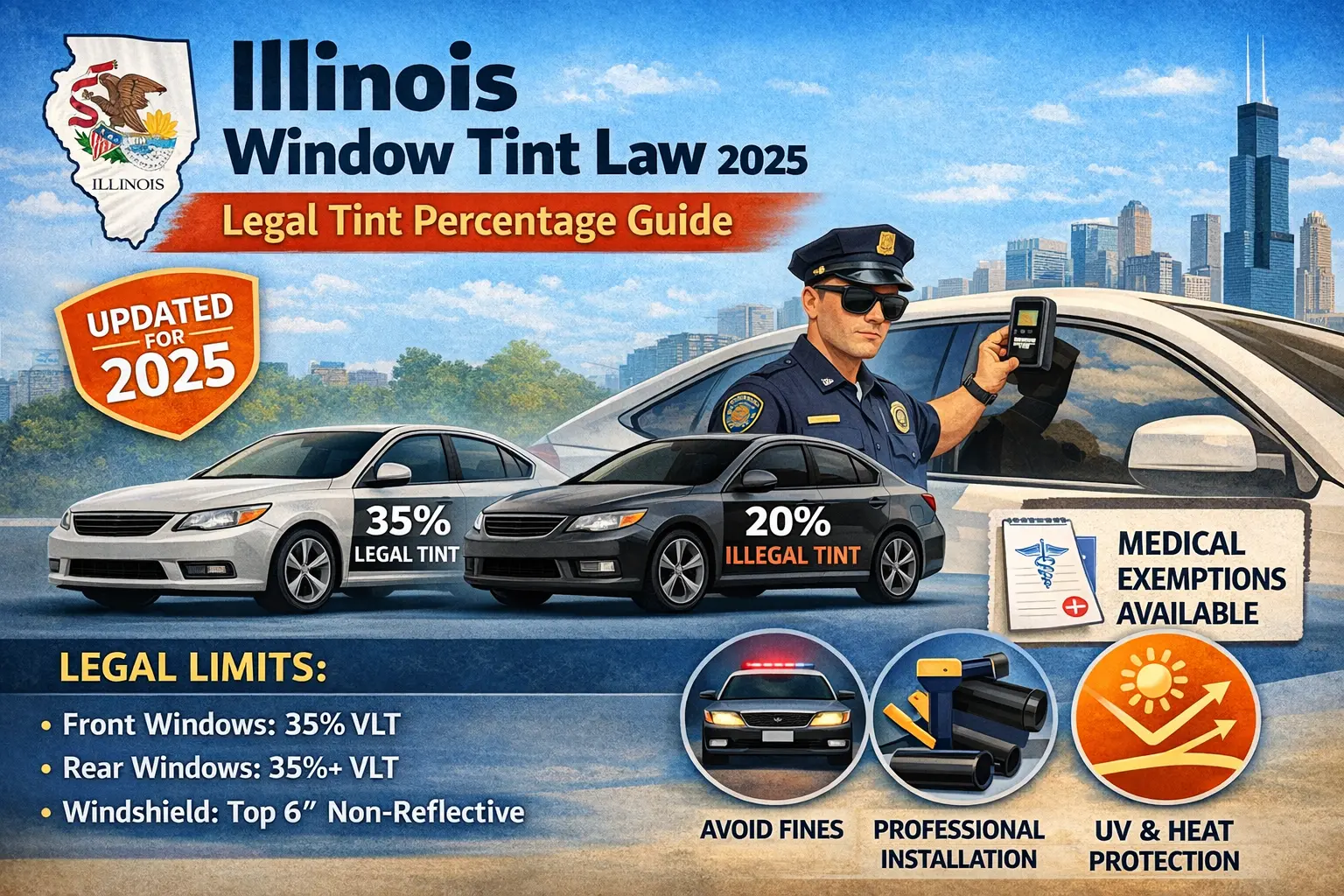
If you live in the Land of Lincoln, you might want to tint your car windows. Dark windows keep your car cool. They also give you privacy and make your car look great. However, you must follow the window tint law Illinois to avoid getting a ticket.
At Legal case news, we want to help you stay safe and legal. The rules for window tinting can be a bit confusing. Some rules are for small cars, and others are for large SUVs. This guide will explain the illinois window tint law in simple terms so you can drive without worry.
What Is Window Tint and Why Does It Matter?
Window tint is a thin film applied to vehicle glass. It blocks sunlight, reduces heat, and provides privacy. However, tint that’s too dark creates safety concerns. Police officers need to see inside vehicles during traffic stops. Drivers need clear visibility, especially at night.
Illinois has strict rules about how dark your window tint can be. These laws exist to balance driver preferences with public safety needs.
Understanding Tint Percentage Measurements
Window tint darkness is measured by Visible Light Transmission (VLT). This percentage shows how much light passes through the window. A higher VLT percentage means more light gets through, making the window lighter. A lower VLT percentage means less light passes through, making the window darker.
For example:
- 70% VLT allows 70% of light to pass through (lighter tint)
- 35% VLT allows 35% of light to pass through (medium tint)
- 5% VLT allows only 5% of light to pass through (very dark tint)
Illinois Window Tint Law: The Basic Rules
The illinois window tint law sets different limits for different windows on your vehicle. These rules apply to passenger cars, SUVs, and vans.
Passenger Cars (Sedans)
Windshield:
- Only non-reflective tint is allowed on the top 6 inches
- The rest of the windshield cannot have tint
Front Side Windows:
- Must allow more than 35% of light in
- This is the most important rule drivers need to follow
Back Side Windows:
- Must allow more than 35% of light in
- Same requirement as front windows
Rear Window:
- Must allow more than 35% of light in
- If tinted, you must have dual side mirrors
SUVs and Vans (Multi-Purpose Vehicles)
Windshield:
- Only non-reflective tint allowed on top 6 inches
- No tint on the remaining windshield area
Front Side Windows:
- Must allow more than 35% of light in
- This matches the sedan requirement
Back Side Windows:
- Must allow more than 50% of light in
- Slightly lighter than sedans
Rear Window:
- Must allow more than 50% of light in
- Dual side mirrors required if tinted
Tint Reflection Rules in Illinois
The illinois car window tint law also controls how reflective or mirror-like your tint can be. Highly reflective tint can blind other drivers, creating dangerous situations.
For All Vehicles:
- Front side windows cannot have reflective or mirrored tint
- Back side windows cannot have reflective or mirrored tint
- Metallic or mirrored appearances are prohibited
Medical Exemptions Under Illinois Law
Some people have medical conditions that require extra protection from sunlight. The window tint law in illinois allows exemptions for these situations.
Who Qualifies:
- People with photosensitivity disorders
- Individuals with lupus or similar conditions
- Anyone with a doctor-verified medical need
How to Get an Exemption:
- Obtain written documentation from a licensed physician
- The letter must explain your medical condition
- Keep this documentation in your vehicle at all times
- Show it to police if stopped
Medical exemptions allow darker tint than standard limits. However, you still cannot have completely blacked-out windows. Law enforcement must be able to see inside the vehicle for safety reasons.
Colors and Restrictions
Illinois law doesn’t ban specific tint colors. However, some colors may attract unwanted attention from law enforcement. Red and amber tints can be confused with emergency vehicle lights.
Recommended Approach:
- Stick with neutral colors (black, gray, or slight blue)
- Avoid colors that mimic emergency vehicles
- Choose professional-grade film from reputable installers
Penalties for Violating Window Tint Laws
Breaking the illinois front window tint law results in consequences. While not the most serious traffic violation, illegal tint can cause problems.
Possible Penalties Include:
- Traffic citation and fine (typically $50-$200)
- Required removal of illegal tint
- Failed vehicle inspection
- Additional scrutiny during future traffic stops
Police officers can use tint meters to measure your VLT percentage during stops. These devices provide accurate readings. Arguing about tint darkness rarely works when an officer has measurement data.
How Legal Case Newz Helps You Stay Informed
At Legal Case Newz, we understand that traffic laws change and interpretation varies. Our team researches Illinois vehicle regulations to provide accurate, current information. We’ve helped thousands of drivers understand their legal rights and responsibilities.
We recommend consulting with local law enforcement or a professional tint installer if you have questions about specific situations. Legal Case Newz provides general guidance, but individual circumstances may vary.
Choosing a Professional Tint Installer
Working with experienced professionals helps you stay within legal limits. Quality installers know the illinois window tint law 2025 requirements and use proper measurement tools.
What to Look For:
- Installers who guarantee legal compliance
- Written warranties on materials and installation
- Use of quality films from known manufacturers
- References from previous customers
- Membership in professional tinting associations
Cheap tint jobs often use inferior materials that fade, bubble, or peel. These installations may not meet legal standards. Spending more upfront saves money on removal, reinstallation, and potential fines.
Checking Your Current Tint
If you bought a used car with existing tint, verify it meets legal requirements. Many vehicles have illegal tint from previous owners.
Steps to Check:
- Visit a professional tint shop for measurement
- Ask your mechanic during routine service
- Purchase a VLT meter (available online for $30-$100)
- Have it checked during vehicle inspection
Don’t assume your tint is legal just because you haven’t been stopped. Proactive checking prevents future problems.
Window Tint Benefits Within Legal Limits
Even at legal percentages, window tint provides valuable benefits.
Advantages Include:
- Reduced heat inside your vehicle (up to 60% heat rejection)
- Protection from harmful UV rays (99% UV blocking)
- Less glare while driving
- Increased privacy
- Protection for interior materials from sun damage
- Potential safety benefit if glass breaks (film holds pieces together)
Legal tint strikes a balance between these benefits and safety requirements.
Comparing Illinois to Neighboring States
Understanding how the illinois window tint law compares to nearby states helps if you travel frequently.
Quick Comparison:
- Wisconsin: Allows 50% VLT on front windows (more restrictive)
- Indiana: Allows 30% VLT on front windows (less restrictive)
- Iowa: Allows 70% VLT on front windows (much more restrictive)
- Missouri: Allows 35% VLT on front windows (same as Illinois)
If you frequently drive across state lines, ensure your tint meets the most restrictive state’s requirements.
Take Action: Stay Legal and Protected
Now that you understand Illinois window tinting regulations, take steps to ensure compliance. Legal Case Newz recommends these actions:
Immediate Steps:
- Check your current tint percentage
- Remove or replace illegal tint
- Keep medical exemption paperwork current and accessible
- Choose reputable installers for new tint
- Ask for written confirmation that your tint meets state laws
Long-Term Practices:
- Review tint condition annually
- Check for law updates (though changes are rare)
- Maintain documentation of professional installation
- Educate family members who drive your vehicle
Conclusion
The window tint law Illinois provides clear guidelines for legal tint percentages. Front windows must allow more than 35% light transmission for passenger cars. SUVs and vans have slightly different requirements for rear windows. Medical exemptions exist but require proper documentation.
Staying within legal limits protects you from fines, failed inspections, and unnecessary traffic stops. Quality professional installation ensures compliance while providing heat reduction, UV protection, and privacy benefits. Don’t risk penalties by guessing about tint darkness.
Legal Case Newz encourages all Illinois drivers to verify their window tint meets state requirements. When in doubt, consult with professional installers or local law enforcement. A small investment in legal tint prevents bigger problems down the road.
Ready to ensure your vehicle meets Illinois tint requirements? Contact a certified installer today and drive with confidence knowing you’re fully compliant with state law.
Q: What is the darkest legal tint in Illinois?
For passenger cars, 35% VLT is the minimum for all side and rear windows. This means the tint must allow at least 35% of light to pass through.
Q: Can I have 20% tint in Illinois?
No, 20% tint is illegal in Illinois for standard vehicles without medical exemption. It’s too dark and will result in a citation if discovered.
Q: Do I need a sticker or certificate for legal window tint?
Illinois doesn’t require official stickers, but reputable installers provide certificates showing your tint’s VLT percentage. Keep this documentation in your vehicle.
Q: Can I tint my windshield in Illinois?
Only the top 6 inches of your windshield can have non-reflective tint. The rest must remain clear.
Q: How much does it cost to remove illegal tint?
Professional removal typically costs $25-$50 per window. DIY removal is possible but risks damaging window defroster lines or leaving adhesive residue.
Related Articles:
20% Tint on Car
30% Tint on Car
Florida Window Tinting Law
Michigan Window Tint Laws
California Window Tint Laws
Legal Percentage of Window Tint