Introduction
Both these laws are important, but quite different because of their different functions and very different procedures. Watching the legal system at times even appears baffling when one tries to look for the difference between the two: criminal law and civil law. This article should teach one about civil versus criminal crime, the contrast between criminal and civil cases, and the workings of civil court as against criminal one. It might also discuss civil infraction versus crime and how civil jury versus criminal jury might fit in each case.
What Is Criminal Law
Criminal law involves offenses that harm a collective community or society. It is referred to as a crime when an individual violates a criminal law, and the state undertakes measures to resolve the matter. Offenses such as stealing, assaulting others, using drugs, and murder fall under this category.
In a criminal matter, the authority (known as prosecution) presses charges against an individual for the reason that he has committed an offense (the defendant). The objective here is to punish the offending party while safeguarding society, which may require imprisonment, monetary punishment, or probation periods if the accused person is adjudged guilty.
What Is Civil Law
In contrast, civil law focuses on conflicts between people or companies. Non-criminal cases include conflict over ownership, breach of agreement, family disputes such as divorce and child custody battles, and bodily harm claims.
In a civil dispute, one side (the plaintiff) initiates litigation against another side (the defendant) seeking damages or other forms of relief. The goal of the law in this instance is not punitive. Instead, it is restorative by resolving the issue and compensating the aggrieved party.
Civil vs Criminal Crime: Key Differences
The primary difference between civil and criminal offenses can be identified from the nature of the crime, from whom the case is brought, and also the potential results. To put it simply, A public offense that impacts society in general constitutes a Criminal Act. The state prosecutes these crimes.
Civil violations are conflicts at a personal level where an individual or entity alleges damage or deprivation inflicted upon them by another individual or organization. Learning about the most prominent distinctions between the civil and criminal law can facilitate the comprehension of how both jurisdictions are organized and who brings the legal proceedings to the court as well as what type of results can be anticipated.
Both the systems have different purposes: criminal law is meant to correct wrongdoing by making wrongdoers pay, whereas, civil law is meant to solve disputes between individuals and award damages to the victim. It is critical to be aware of such differences, even when you are not embroiled in a court proceeding, but you want to know more about the way the justice system works. Here’s a simple breakdown of the major concepts differentiating criminal and civil cases.
Aspect Criminal Law Civil Law
Nature of Zeldael Offense by crime against society or the state dispute Conflict of interest of individual or legal persons
Initiated By:
Government (prosecution), Individual or business (plaintiff)
Legal Goal: To punish the offender who deserves appropriate punishment -imprisonment, fine, etc. Resolve conflicting issues and pay/claim for loss damages, compensatory relief to the aggrieved party. Examples: Theft, robbery, assault, drug–related offenses, homicide, Property disputes, personal injury claim, breach of contract claim
Burden of Proof 57 Beyond a reasonable doubt Preponderance of evidence- ‘more likely than not.
Court Criminal court Civil handed courts claim jurisdiction matter.
Jury Role:
Must be unanimous to decide in majority elects tempo setilisadi-prom majority vote possible, dependent on local rules governing
Outcome:
Jail, Fine, Probation, Community service, Injury court-ordered compensation, including but not limited to restraining injunctive relief, payment/fee.
If the offender is found guilty, the criminal court may charge him with assault and punish him. The civil court can hear a lawsuit brought by the injured party for damages for medical bills and emotional distress.
Hence, criminal law is for the public good, whereas civil law concerns itself with personal rights and personal relations. If the two systems are to work together, that is, balance, justice, and accountability in society.
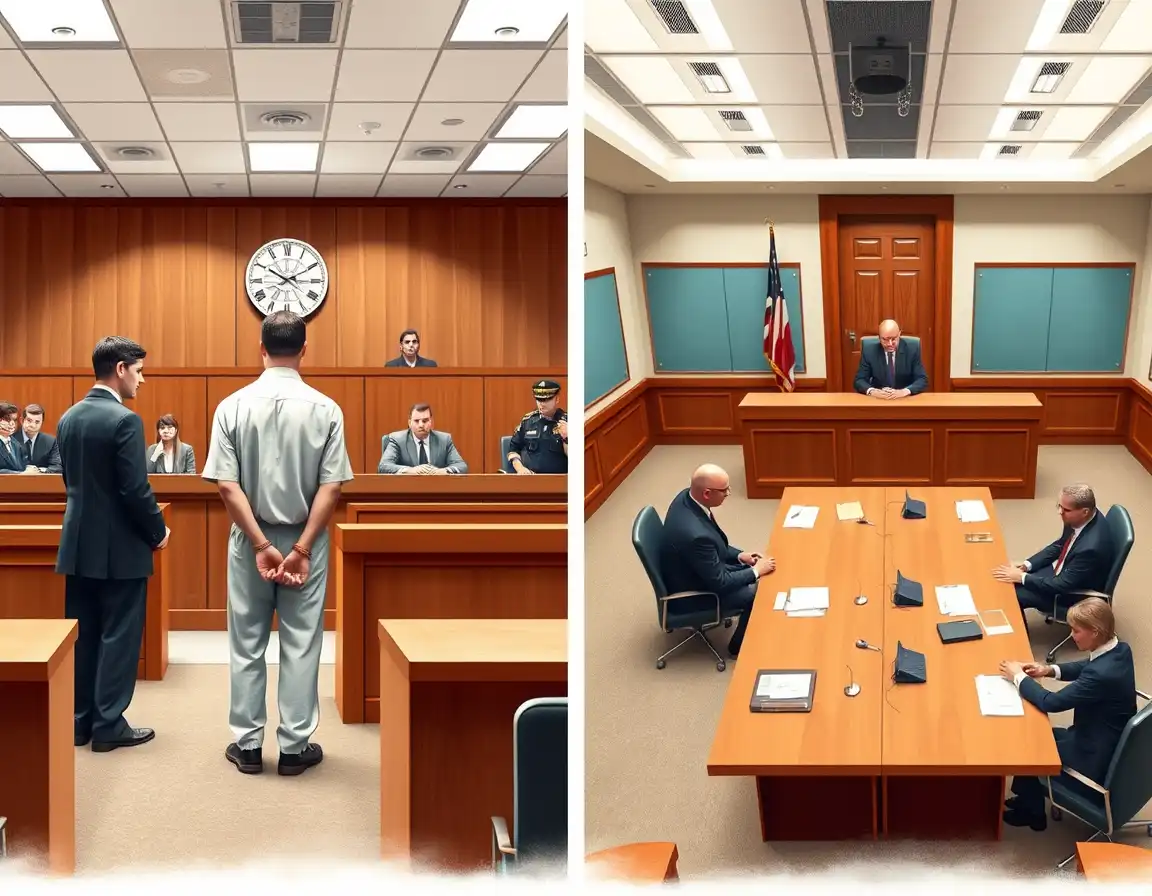
Civil Court vs Criminal Court
Another critical point of divergence is the court in which these cases may be filed. The development process has more differences in civil courts than in criminal courts.
Criminal courts:
Handle cases of persons who have the government prosecution or administrative prosecution, i.e., indictment of a person or individuals for crimes. Under the law, the accused also has the right to a lawyer and to a jury trial and protections.
Civil Courts:
A civil court is a court in which a case is filed as a lawsuit by one natural or artificial person against another natural or artificial person. The procedure consists of presenting evidence, witnesses, and legal arguments in a lawsuit. Civil courts have typically different rules of evidence and procedure and are far less formal than criminal courts.
Example
If someone assaults somebody else, the criminal court will decide between a punishment of jail time or fines for the person. On the other hand, if the victim makes a civil case against the attacker for his medical expenses or emotional distress, that case will be filed in civil court.
Civil Violation Vs Crime
It is important to know how civil violations and crime differ from one another. Not all wrongful acts are crimes; some are termed civil violations or infractions. A civil violation ranges from a minor offense subject to non-jail punishment, as in traffic tickets and zoning violations.
On the other hand, crime refers to a more serious offense leading to the arrest of the accused and will then lead to a criminal record, followed by imprisonment. For example, if you fail to pay rent on time, it might lead to civil actions, while vandalizing the property will be considered a crime.
Civil Vs Criminal Jury
In criminal cases, the jury would have to find that the defendant was guilty “beyond a reasonable doubt,” his guilt being so overwhelmingly likely that its contrary would seem absurd. It is that profoundly serious standard it prescribes.
In civil cases, however, the measure applied by the jury directs it to believe that the defendant is most likely responsible, that is, the measure of preponderance of evidence. The decision need not be unanimous, but would depend on various state-specific rules.
The jury in a criminal case determines whether an accused has committed a crime. A jury would determine whether an entity is liable and the damage awarded to a plaintiff in a civil case.
Civil and Criminal Cases – Real Life Examples
To make clear the distinctions between these two kinds of cases difference between criminal and civil cases, let us refer to a real-life example.
A person meets with a vehicular accident. The said person happens to be drunk; hence, he may be charged by the state with the criminal offense of DUI. The said case will be tried in criminal court and may result in imprisonment and/or a fine.
The injured party is also entitled to file a civil suit against the defendant for the damages caused to him regarding his medical bills and lost wages, as well as pain and suffering. Naturally, this will be an entirely different case in civil court.
Thus, the event may give rise to both a criminal proceeding as well as a civil proceeding; therefore, both are separate with regard to processes, rules, and outcomes involved in them.
Why the Distinction Matters
Many reasons underlie why the differences between difference between criminal and civil cases should be understood:
It helps you identify the kind of legal assistance you need.
Helps one understand what their rights and obligations are.
This will help you maneuver effectively in the legal system in the event of a case.
Whether you are a victim, the defendant, or just someone trying to learn about things through the law, knowing how civil court vs criminal court works gives you valuable insight into how justice is served.
Conclusion
While we were at it, we also researched some significant differences: the concepts of civil vs criminal crime, how the civil versus criminal jury operates, and the difference between a civil violation and a crime. Although both legal procedures are different concerning process and intent, they do work hand in hand to maintain justice and order in society. Visit website for more information related this type of topics.