Many drivers love having tinted windows for privacy and comfort. But the problem is, not all tints are legal. An excessively dark tint can lead to fines, tickets, or even mandatory removal.
Imagine getting pulled over by the police because your windows are “too dark.” It can be stressful, expensive, and time-consuming. Many people are confused about what percentage of window tint is legal, and mistakes can cost a lot.
This guide will clear all your doubts. We will explain the legal percentage of window tint, including state rules, the darkest legal tint allowed, and tips to stay compliant. By the end, you’ll know exactly how to tint your windows safely and legally.
Legal Case News has reviewed applicable state regulations to ensure this guide is accurate and reliable.
What Is Window Tint?
Window tint is a thin layer of film applied to car windows. It can darken windows, block sunlight, and provide privacy. There are different types of tints:
- Dyed film: Absorbs sunlight but can fade over time.
- Metalized film: Reflects heat and strengthens windows.
- Ceramic film: Blocks heat and UV rays without affecting electronics.
- Hybrid film: A mix of dyed and metalized film.
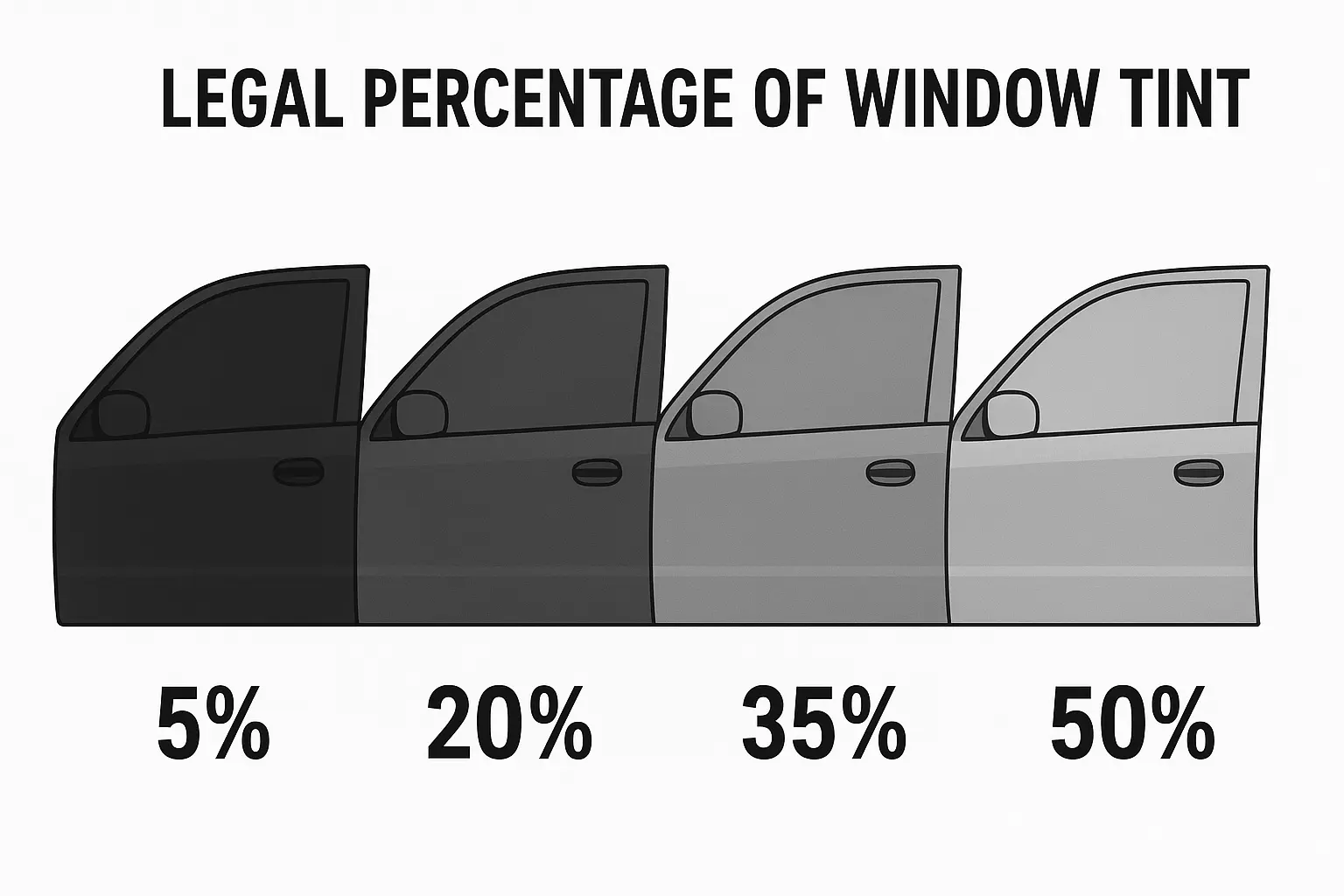
Window tint is measured by Visible Light Transmission (VLT). The VLT number shows how much light can pass through your windows. For example, 35% VLT means 35% of light passes through, and the rest is blocked. The lower the percentage, the darker the window.
Knowing the legal window tint percentage is crucial. Every state has its rules, so you must follow them.
Why Do Window Tint Laws Exist?
Window tint laws are not just for aesthetics. They exist for safety reasons:
- Driver visibility: Dark tints can reduce visibility, especially at night.
- Police safety: Law enforcement needs to see inside your car during traffic stops.
- Accident prevention: Proper visibility reduces crashes.
- Emergency response: In accidents, responders must see inside to help occupants.
Ignoring the legal percentage of window tint can lead to fines, tickets, or even being forced to remove your tint.
Understanding the Legal Percentage of Window Tint
The legal percentage of window tint is the maximum darkness allowed by law. Each state has rules for:
- Front windshield
- Front side windows
- Back side windows
- Rear windshield
Here’s an example of a general guideline:
| Window Type | Typical Legal Tint % | Notes |
| Front windshield | 70% (non-reflective) | Only the top strip is allowed |
| Front side windows | 35%-50% | Must allow enough light to see inside |
| Back side windows | 25%-50% | Often more flexible |
| Rear windshield | 25%-50% | May require side mirrors |
Always check local rules. Texas legal window tint percentage differs from California, Florida, or New York.
Darkest Legal Window Tint Percentage
The darkest legal window tint percentage varies by state and window type. For example:
- Front side windows: Usually 35%-50% VLT
- Back side windows: 25%-35% VLT
- Rear windshield: 25%-35% VLT
The darkest legal window tint percentage is important because it ensures you stay safe and avoid penalties. If your tint is darker than the legal limit, you may face fines or be ordered to remove it.
Texas Legal Window Tint Percentage
In Texas, the law is strict but clear. According to the Texas Department of Public Safety:
- Front windshield: Only top 5 inches can be tinted
- Front side windows: 25% VLT minimum
- Back side windows: 25% VLT minimum
- Rear windshield: 25% VLT minimum
The law also regulates reflectivity and medical exemptions. Following the Texas legal window tint percentage ensures you avoid tickets while staying comfortable in your car.
Factors That Affect the Legal Window Tint Percentage
Several factors affect how dark your window tint can be:
- State laws: Each state has unique limits.
- Window position: Front, back, or side.
- Purpose of the vehicle: Commercial or personal.
- Medical exemptions: Some conditions allow darker tints.
- Reflective tint limits: Highly reflective tints may be restricted.
Always ask what percentage of window tint is legal in your area before applying tint.
Read Also: Florida Window Tinting Law
Pros and Cons of Window Tint
Pros:
- Reduces heat in the car
- Blocks UV rays
- Increases privacy
- Improves aesthetics
- Protects interior from fading
Cons:
- Too dark tints are illegal
- Can reduce visibility at night
- May cause police stops
- Extra cost for removal if too dark
Understanding what is the legal percentage of window tint helps you enjoy the benefits while staying safe.
Common Myths About Window Tint
Many people believe myths about tinting:
- “All dark tints are illegal” – Not true; states allow certain VLT limits.
- “Rear windows don’t matter” – They do, but laws are usually flexible.
- “Reflective tints are safer” – Some reflective tints are illegal.
- “Medical exemptions are easy” – They require documentation.
Knowing the legal window tint percentage clears confusion and prevents trouble.
How to Measure Window Tint
Measuring tint helps ensure it meets the law:
- Use a VLT meter
- Measure each window separately
- Compare with your state’s legal percentage
- Keep documentation for police checks.
Measuring enables you to answer what percentage of window tint is legal for your car.
Tips for Staying Within Legal Tint Limits
- Check your state’s DMV or transportation website
- Ask a professional tint installer about legal limits
- Avoid extremely dark films
- Keep medical exemption certificates if needed
- Regularly inspect tint for peeling or fading
Following these tips keeps you within the legal window-tint percentage and ensures safety.
How to Handle Tickets for Illegal Window Tint
If you are stopped for illegal tint:
- Stay calm and polite
- Show documentation if you have a legal tint or exemptions
- Pay fines if required
- Remove illegal tint promptly
- Check local laws before reapplying.
This process ensures you avoid bigger penalties or legal trouble.
Choosing the Right Window Tint
When selecting tint:
- Consider safety: Don’t choose the darkest film without checking the law.
- Check quality: Cheap tints fade faster.
- Professional installation: Avoid bubbles and peeling.
- Insurance: Some policies may have restrictions.
A legal tint gives comfort without fines. Knowing what percentage of window tint is legal is key.
CTA – Stay Safe and Legal
If you are unsure about your tint, consult a professional. Legal Case News recommends checking state regulations before applying any film. Stay safe, enjoy comfort, and avoid penalties.
FAQs About Window Tint
- What is the legal percentage of window tint in Texas?
In Texas, the legal window tint percentage is 25% VLT for front-side windows and 25% for rear windows. Only the top 5 inches of the front windshield can be tinted. - Can I have darker tints for medical reasons?
Yes. Some states allow medical exemptions for darker tints. Documentation is required. - How do I know if my tint is legal?
Use a VLT meter to measure your windows and compare it with your state’s regulations. - What is the darkest legal window tint percentage for back windows?
It depends on your state, but many allow 25% VLT for back windows. Always check local laws. - Will I get a ticket for slightly darker tint?
Possibly. Law enforcement can issue a ticket even if it’s slightly darker than the legal limit. Removing the tint promptly is advised.
Conclusion
Knowing the legal percentage of window tint is essential for safe driving and avoiding fines. Tinting your windows can improve comfort, reduce heat gain, and increase privacy, but staying within legal limits is critical. Always check your state laws, measure your windows, and use professional installers. Legal Case News
For more information and updates on window tint laws, visit Legal Case News. Stay safe, and ensure your vehicle meets all legal requirements.