The 2023 Hawaii Fire Disaster: History, Impact, Recovery and Justice
The 2023 fire disaster in the Hawaiian Islands forever altered the history of the Islands. Several wildfires quickly escalated to one of the deadliest and most destructive natural disasters in modern U.S. history. The tragedy not only resulted in loss of life and historic buildings, but it also displaced thousands of people, brought the issue of wildfire preparedness, climate conditions, emergency response systems, and legal accountability to the fore in the eyes of the world.
Hawaii is known for its tropical beaches, volcanic sites and tropical rainforests for many. The devastating wildfires in Hawaii, however, showed some other truth. Drought, invasive grasses, high winds, and modifications to the environment over the years have established ideal conditions for a catastrophic wildfire event.
Now the narrative of the fire in Hawaii is not just about destruction; it’s also about families’ resilience, recovery, rebuilding and justice.
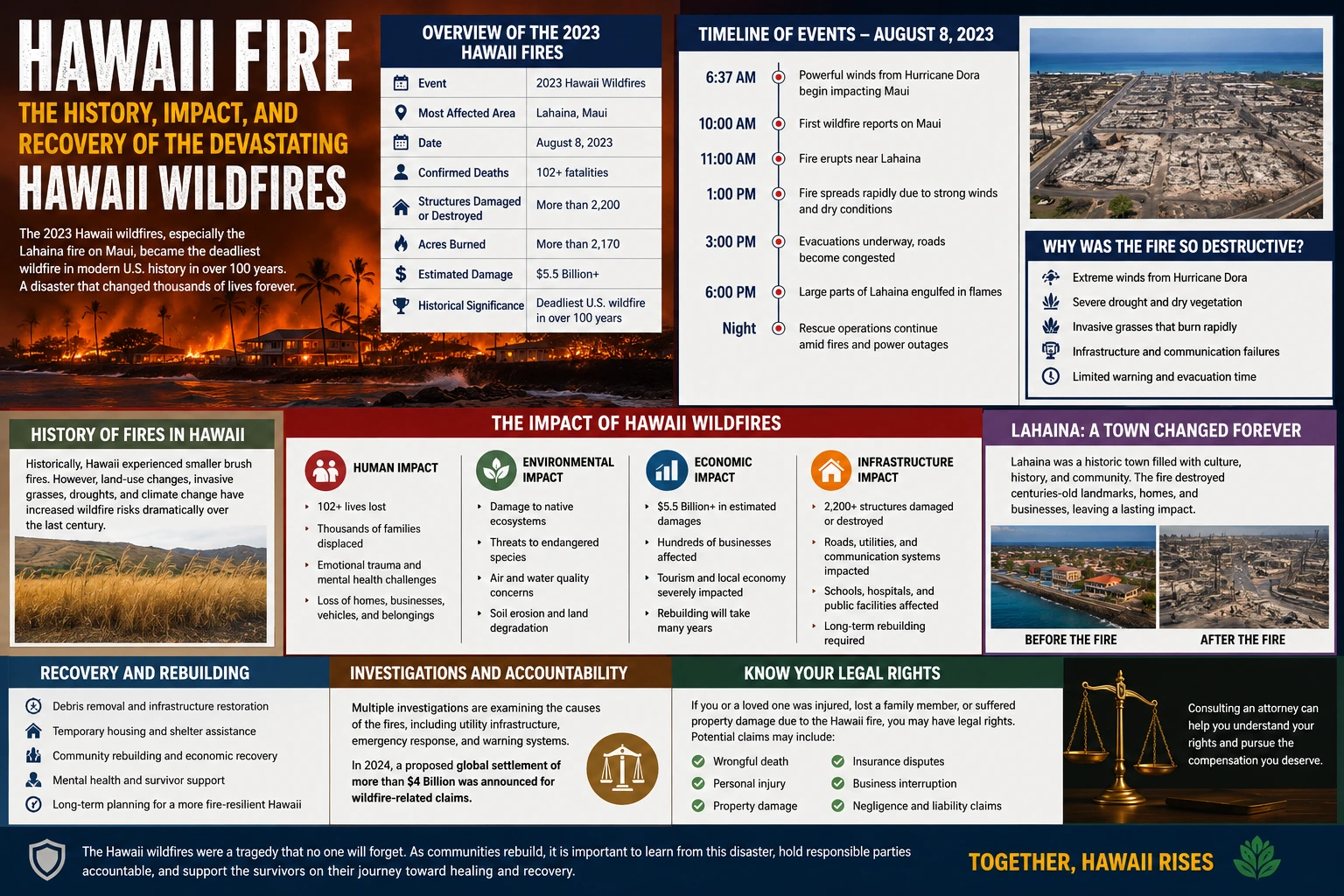
Hawaii Fire at a Glance
- Category Details
- Event 2023 Hawaii Wildfires
- Peak Area/Lahaina (most affected)
- Date August 8, 2023
- Confirmed Deaths 102+ fatalities
- Damage to, or destruction of, structures Over 2,200
- Estimated Damage $5.5 Billion+
- Acres Burned: More than 2,170
- Status Recovery and rebuilding continues
It was the largest (deadliest) wildfire in the United States in more than a century.
The Lahaina wildfire was the most deadly natural disaster in Hawaii since statehood and one of the most deadly wildfire disasters in the history of the United States.
Understand the History of Fire in Hawaii
Understand the history of fire in Hawaii.Learn about the history of fire in Hawaii.
Many people who think that fires are not common in Hawaii are surprised to learn that fires do occur in Hawaii.
The Rise of Wildfire Risk in Hawaii
In the past, Hawaii had been seeing smaller brush fires and mini wildfires. In the twentieth century the risk of wildfire rose sharply, though, because of significant changes in land-use.
In the old days, Hawaii was dotted with large plantations. When numerous plantations closed down a large expanse of land was left untouched. In time, invasive grass species spread throughout these lands. These grasses are prone to early drying and burn readily, compared to native plants.
Factors Increasing Wildfire Risk
For years, scientists have been warning of a rising threat of wildfires in Hawaii due to:
- Expanding dry grasslands
- Longer drought periods
- Reduced rainfall
- Hotter temperatures
- Strong seasonal winds
- Aging infrastructure
Unfortunately, these warnings were put to action in the devastating wildfires that occurred in Hawaii, on Maui in 2023.
August 8th, 2023, the Day Hawaii Was on Fire
The most destructive period of the history of Hawaii fires started on August 8, 2023.
Hurricane Dora’s strong winds made for dangerous conditions on the Hawaiian Islands. The hurricane, though still hundreds of miles away, was adding to drought conditions, making for an extreme fire environment.
There were several fires that began on the east side of Maui.
The worst blaze started near the historic town of Lahaina, which was the capital of the Hawaiian Kingdom.
Fire quickly engulfed residential areas, businesses, schools, cultural landmarks, historic districts in just a few short hours.
The Experience of Residents During the Fire
Residents reported seeing:
- Walls of fire coming to the neighborhood.
- Flying embers and burning pieces of wood.
- Vehicles catching fire
- Roads becoming blocked
- Communication failures
- Limited evacuation time
Some managed to flee by driving through flames and others jumped in the Pacific Ocean to avoid the flames that were coming their way.
Why Hawaii’s Fire Was So Destructive?
1. Hurricane-Driven Winds
The high winds were one of the main factors that made the wildfire Hawaii disaster so deadly.
Embers were quickly blown into neighborhoods, setting off several fires at once.
The winds also severely hampered fire fighting efforts.
2. Drought Conditions
There was drought on Maui, covering a large part of the island.
Dry vegetation served as plenty of fuel for the blazing fires to rapidly overrun.
3. Invasive Grasslands
Wetland habitats on old farmland were infested with weeds, providing fuel for wildfires.
These grasses have been singled out over and over again by experts as being a big problem in wildfire risk for modern Hawaii.
Infrastructure and Emergency Challenges
Multiple investigations examined:
- Emergency communication systems
- Evacuation procedures
- Utility infrastructure
- Warning systems
- Fire response coordination
These inquiries continue to drive conversations around accountability and preparedness going forward.
The Destruction of Historic Lahaina
Lahaina was the hardest hit town.
Prior to the fire, Lahaina was one of the most significant historic and cultural sites in Hawaii.
The town contained:
- Historic churches
- Museums
- Art galleries
- Restaurants
- Hotels
- Local businesses
- Historic waterfront properties
Much of Lahaina had been burned to ashes after the fire.
Entire neighborhoods disappeared.
There were also family homes destroyed that were generational.
More than a hundred years old historic structures were destroyed. It destroyed and damaged over 2,200 buildings, and was one of the most destructive wildfires in American history.
Human Impact of the Hawaii Wildfires
The numbers don’t tell the whole story.
Thousands of families lost:
- Homes
- Businesses
- Vehicles
- Family heirlooms
- Personal records
- Employment opportunities
Long-Term Effects on Survivors
An increasing number of survivors are still suffering from:
- Emotional trauma
- Housing insecurity
- Financial hardship
- Mental health challenges
- Community displacement
Post-disaster studies revealed the mental, economic and long-term housing impacts on disaster survivors.
Environmental Impacts of Wildfires in Hawaii
The impact of the Hawaii fire on the environment is more than destruction of buildings.
The Destruction of Indigenous Ecosystems
The destruction of indigenous ecosystems.Loss of Indigenous Ecosystems.
Hawaii’s rare and endangered flora and fauna is vulnerable to wildfires.
Air Quality Problems
Smoke pollution impacted communities throughout Maui and other nearby islands.
Water Contamination Risks
Drinking water systems and coastal ecosystems may be affected by wildfire debris.
Soil Erosion
During periods of intense rain, burned landscapes can be easily eroded.
Long-term environmental effects of the disaster are still being investigated.
Economic Damage and Recovery
The economic loss from the largest fire crisis ever in the modern history of Hawaii is incalculable.
Estimated Economic Losses
- Category Estimated Impact
- Total Damage $5.5 Billion+
- Structures Lost 2,200+
- Residential Damage About 86% of affected buildings were damaged.
- Businesses Impacted Hundreds
- Residents Displaced Thousands
The recovery process includes involvement from federal, state, non-profit, insurance and community groups. Experts estimate that it could take years for it to be rebuilt.
Latest Updates on Recovery Efforts
The latest updates on recovery efforts are given.The latest updates on recovery efforts are provided.
Hawaii is making a recovery and has advanced in debris removal, temporary housing, rebuilding infrastructure and rebuilding communities.
Main Rebuilding Work Activities
The following are the main rebuilding work activities:
- Permanent housing construction
- Utility restoration
- Historic preservation projects
- Economic recovery programs
- Community support initiatives
But there are still thousands of people who have been affected by the disaster who are still struggling to get back on their feet, especially in terms of their housing and livelihoods, which have not improved much in the last three years.
The Investigative Process, Lawsuits and Accountability
Questions of Negligence and Responsibility
Questions have been raised about whether negligence played a role in the tragedy and include:
- Electrical infrastructure
- Utility operations
- Emergency management
- Public warning systems
- Disaster preparedness
Hawaii Wildfire Settlement and Legal Developments
Hawaii authorities in 2024 announced a proposed settlement for damages resulting from the wildfires that occurred in the state, amounting to over $4 billion worldwide. This is one of the largest wildfire related settlements in U.S. history.
Understanding Legal Rights After the Wildfires
Families can use these to help them understand what they can expect from the court and what they have the right to do.
Given the nature of this article, it is imperative to be aware of the fact that there is law in the world, and that issues of negligence could arise for those who have suffered losses as a result of wildfire.
Types of Claims After the Hawaii Wildfires
People who have been impacted by the wildfires in Hawaii could have claims against:
- Wrongful death
- Personal injury
- Property damage
- Insurance disputes
- Business interruption losses
- Utility negligence
- Premises liability
- Government accountability issues
Steps for Protecting Legal Rights
If you or a family member have been injured, lost property, lost a loved one or have suffered any type of financial loss as a result of the fire in Hawaii, it is important to preserve evidence, maintain insurance records, document losses, and seek legal advice as early as possible.
The Future After the Hawaii Wildfire Tragedy
The Hawaii wildfire tragedy will be one of the worst disasters in American history. As communities are rebuilding, survivors and families deserve answers, accountability and access to legal tools to ensure their rights are protected and to seek fair compensation if negligence is a factor in their losses.