Window tinting can make a vehicle look good, increase privacy, protect the interior from damaging UV rays, and reduce the interior temperature in hot weather. But each state has its own window tint darkness laws. It is important to know Virginia Tint Laws before installing or replacing window film because you may get a fine, fail an inspection or be required to remove tint that is not legal.
Whether you’re looking for the tint laws in Virginia 2026 or West Virginia 2026, you’ll find comprehensive information on legal tint percentages, windshield requirements, medical exemptions, penalties, inspection rules, the history of tint laws, differences between Virginia and West Virginia tint laws, and answers to your frequently asked questions.
What is Tinting in Virginia?
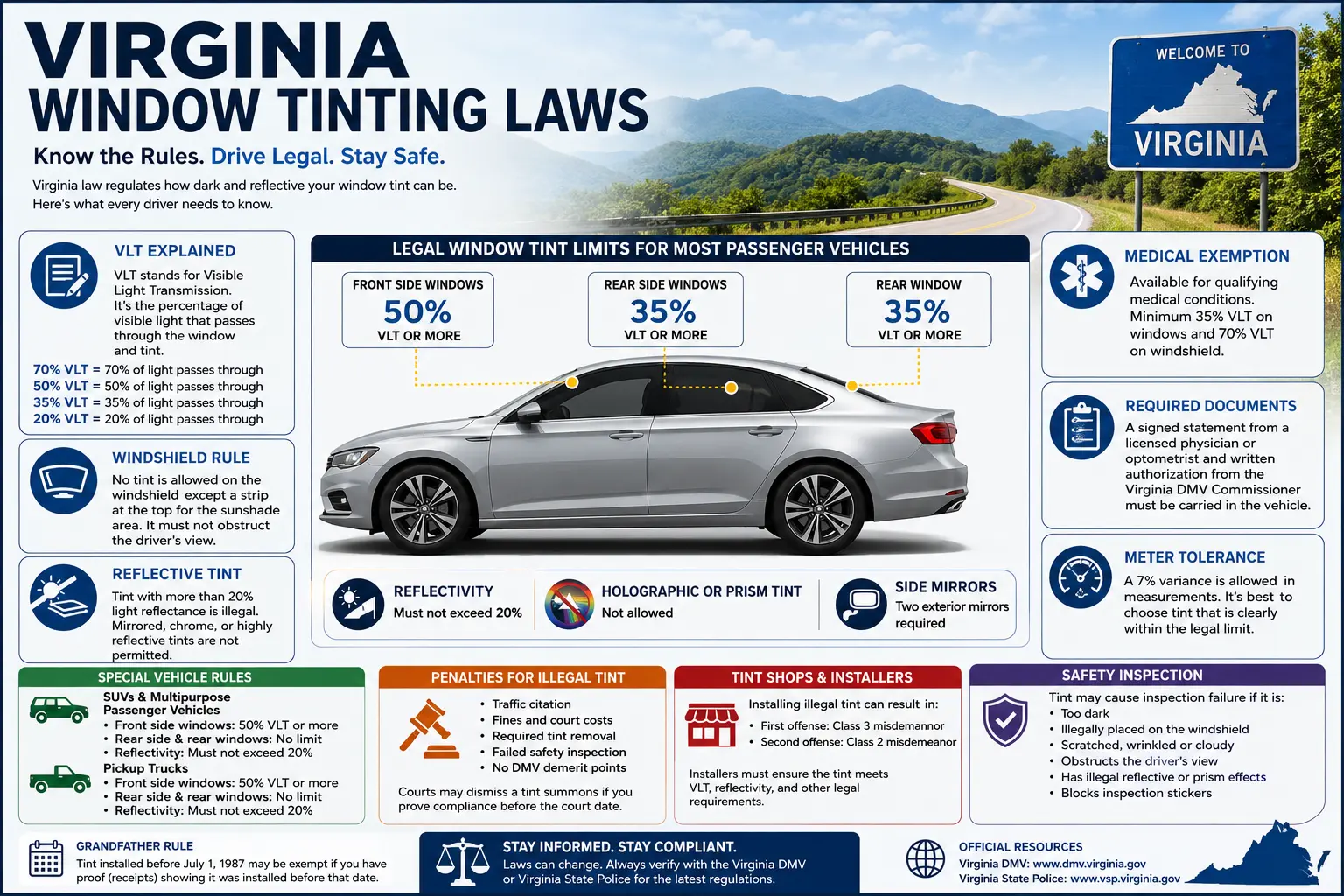
The tint percentage refers to the amount of visible light that can pass through the glass of a vehicle in Virginia tint laws. The percentage is known as Visible Light Transmission (VLT).
The lower the VLT percentage, the darker the window tint.
For example:
- 70% VLT means that 70% of the light gets in from outside the vehicle.
- 50% VLT means that only 50% of the light can get in.
- 20% VLT produces a very dark effect.
Virginia law has various provisions for:
- Passenger cars
- SUVs
- Vans
- Pickup trucks
- Multi-purpose vehicles
Understanding the correct limits for VLT can help keep drivers in Virginia’s legal tinting limits.
Virginia Tint Laws 2026
Blackout window tint in Virginia is legal for tint darkness only up to a specific percentage.
The current Virginia tint laws 2026 stipulate the following:
- The total number of passenger cars, SUVs, Vans & Trucks sold in the given window.
- Clear Windshield Non-reflective tint above AS-1 line Same
- Windows on the front side and on the side with a minimum 50% visible light transmission.Windows on front side and side with at least 50 percent VLT.
- Normal Side Windows 35% VLT or less Any darkness
- Rear Window Minimum 35% VLT Any darkness (dual mirrors required)
These are the key window tint restrictions that are being enforced across the state of Virginia now.
Virginia Windshield Tint Laws
The regulations governing window tinting on the windshield in Virginia are the strictest.
Only drivers may install:
- Non-reflective tint
- Above the manufacturer’s AS-1 line is defined by the following criteria:
- Or within the top few inches allowed by federal safety regulations.
Windshields are 90 percent tinted or darker unless otherwise exempted by medical reasons.
Virginia Front Side Window Tint Laws
One of the windows that are most closely examined during vehicle inspections is the front side windows.
Virginia car tint laws say:
- All window openings on the front side of the house should let in 50% or more of visible light.
- It is considered illegal for most vehicles to use darker films.
- The tint may be too dark and can lead to an inspection failure.
The front windows are easy to check for law enforcement and violations are often observed.
Rear Side Window Tint Rules
Do not place window tint on the rear of the vehicle.
The rules apply to the rear side window depending on the type of vehicle.
Passenger Cars
For passenger cars:
- Minimum 35% VLT
SUVs and Trucks
Multi-purpose vehicles have fewer restrictions.
There are many SUVs, vans and pickup trucks that can legally have much darker rear side tint.
This separation gives bigger vehicles greater window tint options according to Virginia window tint laws.
Rear Window Tint Rules
There’s a variety of regulations applicable to rear windows as well.
The typical requirements for passenger cars are:
- Minimum 35% VLT
Darker tint is allowed for SUVs, vans and trucks but must have working side mirrors.
Rear visibility is still required; proper mirrors are still required.
Reflective Tint Restrictions
The heat is minimized by reflecting sunlight with reflective window film.
The reflectivity limits in Virginia are imposed due to the fact that extreme mirror surfaces can produce a glare hazard.
Window tinting laws in Virginia do not allow window tint films that are too dark.
The metallic and mirrored tint products should always be verified before installation.
Tint Color Restrictions
Tint colors are also regulated in Virginia.
Typical colors banned are:
- Red
- Yellow
- Amber
For most legal installations, the following is used:
- Charcoal
- Black
- Smoke
- Neutral gray
These colors are not only compliant with the Virginia window tint laws, but they also offer great appearance.
Medical Exemptions: Virginia Tint Laws
Certain drivers are eligible for a darker tint due to medical reasons.
Some conditions which may be eligible are:
- Lupus
- Photosensitivity disorders
- Certain skin diseases
- Eye disorders that need less exposure to sunlight
Applicants typically need:
- Physician certification
- Required documentation
- For those for whom it is applicable, obtain State approval.
Medical Exemptions can be used to legally drive with a tint window darker than the 10% tint.
Virginia Window Tint Inspection Rules
Tinting your car in Virginia is a straightforward process.Tinting your car in Virginia is simple.
A vehicle safety inspection is conducted in Virginia once a year.
Inspectors evaluate:
- Windshield tint
- Front window VLT
- Rear window compliance
- Reflectivity
- Proper installation
Illegal tint may result in:
- Inspection failure
- Requirement to remove tint
- Reinspection
Having the right tint ensures that you do not have to wait needlessly for the car to be inspected.
Penalties for Illegal Window Tint in Virginia
It is illegal to tint your windows above 20%.
Breaking the Virginia tint laws can result in a number of consequences.
Potential penalties include:
- Traffic citations
- Monetary fines
- Remove illegal tint order issued.
- Failed vehicle inspection
- Additional court costs
The more often it happens, the more costly it may be in the long run.
When illegal film is removed promptly, it typically doesn’t create further enforcement problems.
How Police Measure Window Tint
Special electronic tint meters are used by law enforcement officers.
These devices measure:
- Visible Light Transmission
- Tint darkness
- Adhering to legal percentages.
Tint meters are used during traffic stops for tint issues and are very accurate.
Factory Tint vs Aftermarket Tint
It is common to see many people mistake factory tint and aftermarket tint.
Factory Tint
Factory privacy glass is a glass product that has been made with privacy.
It is common on:
- SUVs
- Pickup trucks
- Vans
Aftermarket Tint
This is the aftermarket film where the film is actually applied onto an existing window.
Even if a vehicle is installed through a non-compliant window tint provider, it will still need to meet Virginia window tint laws.
Benefits of Legal Window Tint
There are many advantages to Legal Window Tint. Legal Window Tint has numerous benefits.
There are many benefits of legal window tint and it’s not against state law.
Benefits include:
- UV protection
- Reduced interior heat
- Improved privacy
- Better driving comfort
- Less interior fading
- Reduced glare
- Increased energy efficiency
- Improved appearance
With legal tint percentages, you can get these advantages without facing legal hassles.
History of Tint Laws in Virginia (VA)
Window tint laws started to become more prevalent in the late 1980’s in the U.S.The window tint laws began to be more widespread in the late 1980s in the U.S.
Tint laws have been centered around a few main areas at first:
- Driver visibility
- Officer safety
- Nighttime driving
- Accident prevention
Virginia has revised its window tint laws over the years to meet the needs of consumers and the safety of the public.
Advancements in technology have also had an impact on modern film tints, with more advanced films providing excellent UV protection without having to be as dark.
Virginia Tint Laws 2023, 2024, 2025, and 2026
Many drivers look for past versions of the law and some of the most popular ones are:
- Virginia tint laws 2023
- Virginia window tint laws 2024
- Virginia tint laws 2025
- Virginia tint laws 2026
While this may change from time to time, the fundamental requirements of the law for VLT enforcement and administration have largely stayed the same over the last few years.
Always check any changes in legislation before applying window film to your car, especially if buying vehicles from another state.
Virginia Tint Laws vs West Virginia Tint Laws
The state of Virginia and the state of West Virginia have different tint laws.There are tint laws in Virginia and West Virginia.
Many people think of Virginia tint laws and West Virginia tint laws, but there are different requirements.
| Feature | Virginia | West Virginia |
|---|---|---|
| Moderate Side Windows | 20% – 30% VLT | Different state-specific limit |
| Rear Side Windows | 35% (cars) | Different regulations |
| Rear Window | Different regulations | 35% (cars) |
| Windshield | AS-1 line only | Similar, but state-specific rules |
| Medical Exemptions | Available | Available under separate requirements |
Drivers who travel between different states should check the west virginia tint laws and west virginia window tint laws before making any changes, as each state has its own laws.
Choosing A Legal Tint Installer
A good installer will:
- Understand Virginia regulations
- Certified window films to provide.
- Before installing, measure VLT
- Explain legal options
- Provide warranty documentation
- Employ good installation practices
Professional installation will ensure no bubbling, peeling or legal problems.
Common Errors Drivers Make
Common errors drivers make while driving.
Many tinting violations are due to the fact that drivers:
- Always presume that the tint on the car is the factory tint.
- Buy movie online without state laws.
- The front window tint should be darker.
- Annual inspection is not required to be performed.
- Change of state without updating their tint
By steering clear of these pitfalls, you can help ensure long-term compliance.
Frequently Asked Questions
Is 20% tint allowed in VA?
In most cases, a 20% tint is illegal on car front side or back window tint due to the tint darkness.
May I tint all of my windshield?
No. Tint that is not reflective over the AS-1 tint line is usually allowed, except for those with an approved medical exemption.
Is it legal for police to pull you over for tint?
Yes. Police can pull over a car if they reasonably suspect that the window tint is in violation of Virginia window tint laws.
Are there tint laws that are different for SUVs?
Yes. SUVs, vans, and pickup trucks typically have a lower percentage tint on the back than passenger cars.
May I have a medical exemption?
Yes. People who have medical conditions that qualify for them can request to have darker window tint.
Does tinted car windows with black tint fail inspection?
Yes. A vehicle that has tint that is not allowed by Virginia law can fail a Virginia’s annual safety inspection and could be required to be corrected before passing.
Last Words About Virginia Tint Laws
Each car owner who is contemplating window tint is required to know about the Virginia tint laws. Researching tint laws virginia, comparing virginia window tint laws, reading window tint laws in Virginia, and comparing them to West Virginia window tint laws ensures that you will be able to stay out of the trouble of fines, inspection failures and avoid the needless expense.
By selecting legal tint percentages, hiring a professional installer, and staying up to date with state regulations, you can enjoy a safe, comfortable, and legal driving experience with your tinted vehicle. It’s important to remember to check the VLT percentage before applying any type of aftermarket window tinting film and ensure that the film is approved by the most recent tint laws in Virginia in 2026 to get the advantages of window tinting film without breaking the tint laws.